RIB or Foldable Inflatable Boat? Start With Storage, Launch and the Complete Package
A rigid inflatable boat (RIB) and a foldable inflatable can look similar in a listing photo: both have inflatable tubes and a pointed bow. In daily use they are very different. One keeps a rigid hull, the other packs into bags. Raft Inflatable, the brand of Weihai Reachsea Outdoors Co., Ltd, builds both, and its guide on RIB or foldable inflatable argues that the decision should start in the garage or marina, not in the catalog.
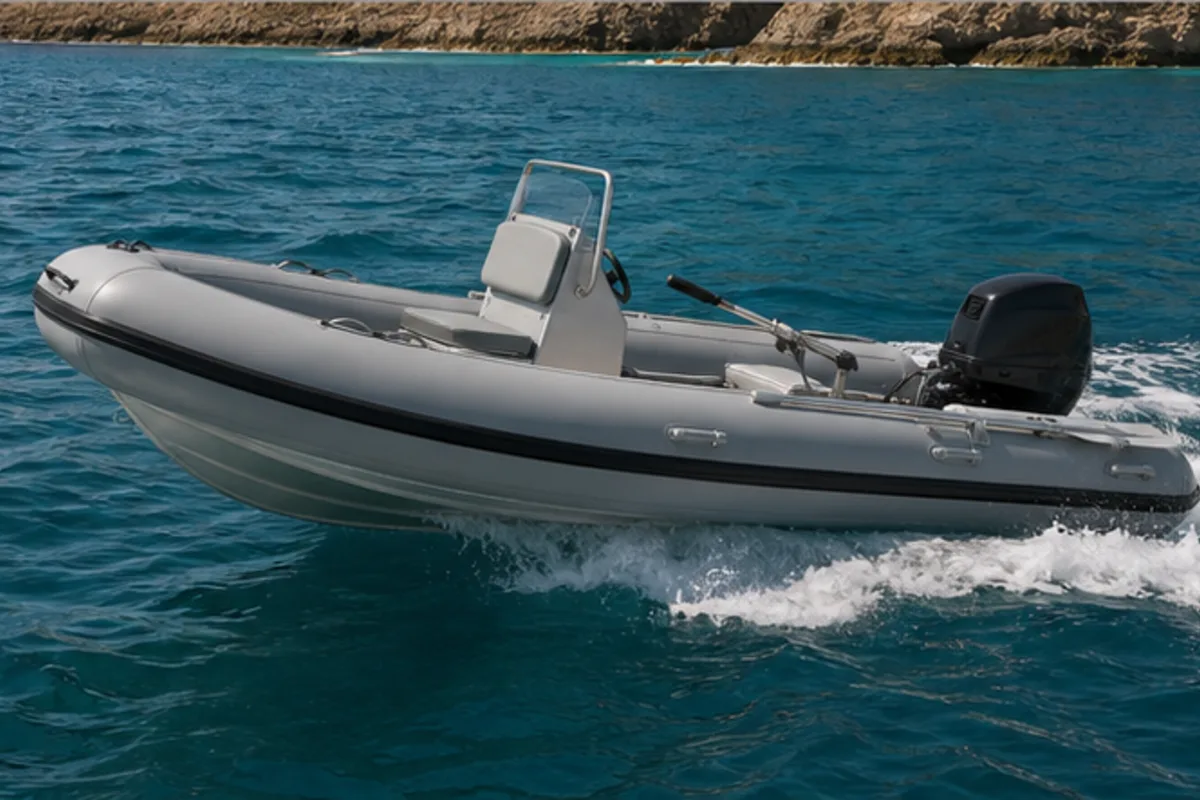
Aluminum hull RIB boat on the water. Image: raftinflatable.com.
What each format looks like in the catalog
On the RIB side, the aluminum RIB program covers boats from 245 cm to 420 cm with UL, UT, A340 and A360 models. Example rows include the UL245 at 245 cm with 9.9 hp and three persons, the UL280 at 280 cm with 15 hp and four persons, and the UL320 at 310 cm with 20 hp and five persons. The RIB tender program adds 330 cm to 390 cm tenders rated from 25 hp to 50 hp for five or six persons. The LE330 and LE380 list PVC or Hypalon-style tubes on an aluminum hull, and the GT rows list a PVC tube option on an aluminum hull with console and navigation notes.
On the foldable side, the RSM dinghy and RSD inflatable boat programs use airmat, slatted or aluminum floors. RSD rows run from 210 cm to 420 cm and two to seven persons. These boats can be split into a hull bag and floor parts.
All of these figures are catalog data. The site states that person and motor ratings alone do not establish payload, suitability or destination-market compliance.
Start at the storage location
The first step the site recommends is to measure your available space and decide how the craft will live: assembled, on a trailer, or packed after each outing. A RIB still needs space for its rigid hull. The FAQ is blunt on this point: a RIB's rigid hull keeps its dimensions unless the exact design includes a documented folding system.
A folding inflatable may divide into several bags and rigid floor pieces. That makes it easier to store in an apartment, a car boot or a yacht locker, but it also means more parts to keep track of and more assembly time at the water.
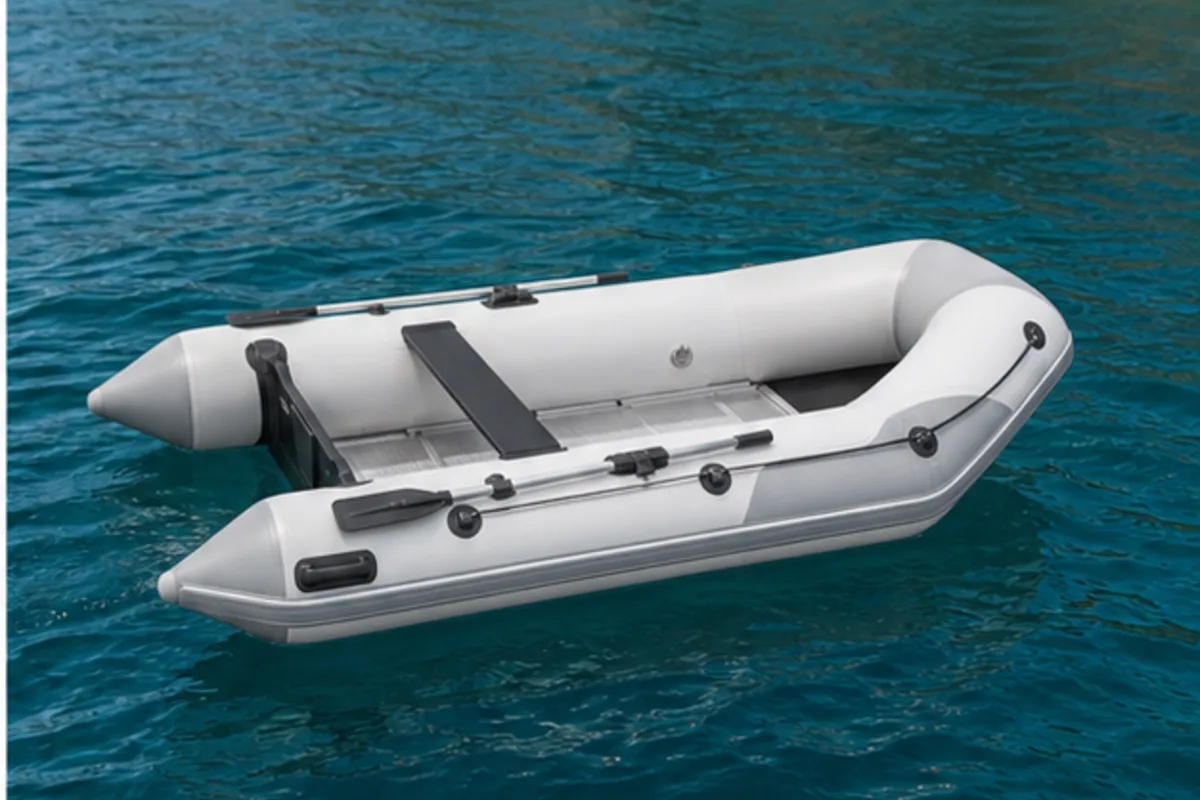
Foldable RSM inflatable dinghy on the water. Image: raftinflatable.com.
Compare launch requirements honestly
List the people, ramp, trolley or lifting equipment involved in getting the boat into the water. Then ask each supplier for the complete ready-to-launch mass, including fitted equipment. The site points out that handling a bare hull in a catalog is different from moving the configuration that will actually reach the water. A console, seats, a motor and a battery change the picture.
For a yacht tender the question is how the boat will be lifted aboard or towed. For a rental base, it is how staff will move several boats every day. For a private owner without a trailer, a foldable boat may be the only practical choice, whatever its other trade-offs.
Price the complete system, not the hull
The site recommends asking each supplier for a drawing that shows seating, propulsion, storage and permitted attachments, and comparing equivalent operating briefs. Hull format alone does not establish acceptable conditions or ride quality for your particular load.
When you compare cost, include everything that comes with the format:
- Transport equipment such as a trailer or trolley for a RIB.
- Floor components, pump and bags for a foldable boat.
- Covers and routine storage needs.
- Packed and assembled dimensions, which affect freight.
Freight matters more than many buyers expect. Raft Inflatable's fees and landed cost page explains that a final quote depends on selected options, carton size, gross weight, export packing and the destination route, and that oversized handling is quoted separately. A rigid hull and a bagged dinghy of similar length can produce very different freight lines.
If both formats remain viable, the site's advice is to review samples using the same passenger and equipment plan before deciding. That keeps the comparison fair and avoids choosing on a single photo.
A short written brief makes those samples comparable. The site's custom inflatable boats page suggests starting from an existing catalog family, such as an aluminum RIB, an RSD inflatable boat or a heavy-duty inflatable, and then stating the use, target size, quantity, destination and documents you need. Add your storage measurements and launch method to that brief. A factory that knows the boat must fit a 2 m locker, or be lifted by two people onto a yacht deck, can steer you away from a model that only looks right on paper. Ask for the answer in writing, together with the packed dimensions and the ready-to-launch weight of the configuration it recommends, so the decision rests on documented figures rather than on a format label.
FAQ
Can a RIB be packed like a soft-floor boat?
No. The rigid hull keeps its dimensions unless the exact design includes a documented folding system.
Which format handles better?
That needs model-specific evidence and comparable conditions. The format name alone does not answer it.
Do Raft Inflatable RIB tenders use Hypalon?
The catalog lists the LE330 and LE380 with "PVC or Hypalon-style tube" on an aluminum hull. Confirm the exact tube material for your order in writing.
How do I get a price for a RIB or dinghy?
Prices are not published. Send the model, quantity, destination and required documents through the contact page or RFQ form for a written quote.
Contact Raft Inflatable: email sale@raftinflatable.com · raftinflatable.com